ARTICLE • 5 min
How to Identify Sustainability Materiality Blind Spots Before Your Competitors Do
June 8, 2026

A materiality assessment is only as robust as the intelligence that shapes it. When organizations develop their sustainability materiality assessments in isolation, without looking at what peers, regulators, and frameworks are prioritizing, they create blind spots.
Materiality blind spots are topics that are genuinely material to your business or sector but have been overlooked or underweighted in your assessment. These gaps can create:
The good news is that blind spots are identifiable, and the methodology for finding them is increasingly accessible through technology.
Many materiality assessments rely heavily on internal stakeholders: leadership teams, sustainability functions, and board members. These groups have valuable perspectives, but they can also reinforce existing assumptions about what matters. Topics that are emerging in the sector may not yet be on the radar of internal stakeholders.
If your benchmarking is based on last year's reports or a handful of manually reviewed disclosures, you may be working with stale data. Sector-level materiality is dynamic. Topics shift in prominence as regulations evolve, investor expectations change, and social issues gain traction.
Organizations often benchmark against a narrow set of well-known peers rather than the full competitive landscape. This creates a false sense of comprehensiveness.
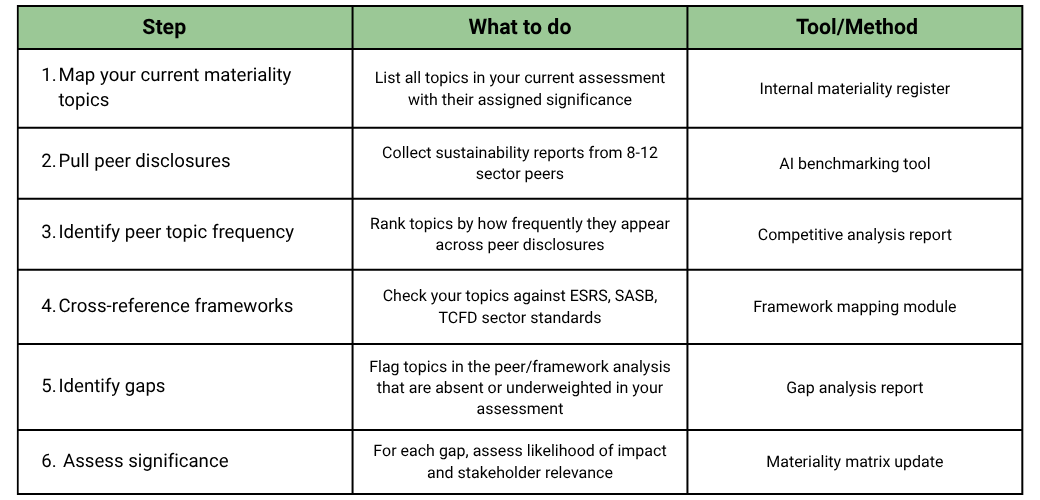
When conducting a blind spot analysis, look for these signals:
Catching any one of these signals early can protect your organization from being caught off guard.
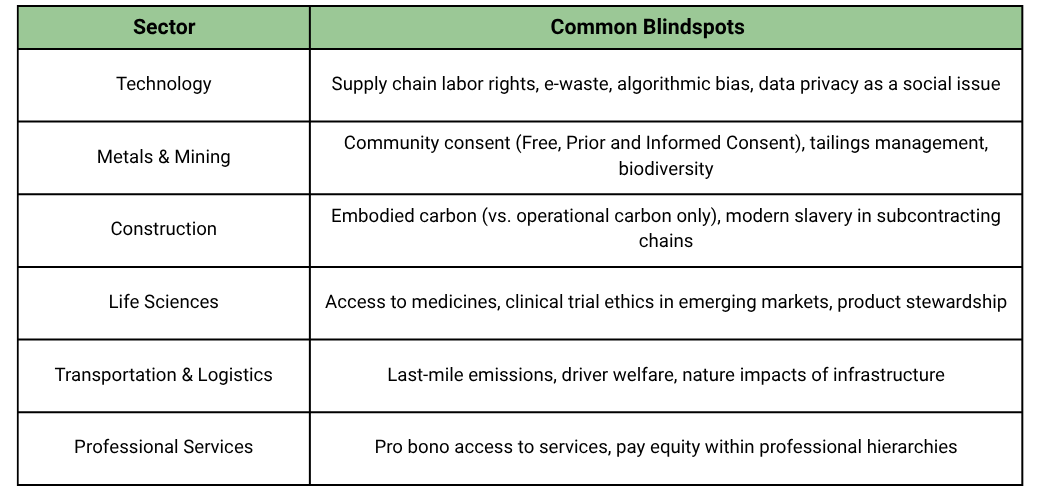
Certain sectors have recurring patterns of materiality blind spots that organizations routinely underweight:
There is a real competitive dimension to materiality identification. Organizations that identify and disclose emerging material topics before they become regulatory requirements or industry norms are positioned as leaders rather than laggards.
This matters because:
Identifying blind spots before your competitors means you get to shape the narrative, rather than respond to it.
Socialsuite's AI-powered benchmarking tool continuously analyzes peer disclosures and framework requirements to surface potential blind spots in your materiality assessment.
The platform's gap analysis module compares your registered material topics against:
The output is a prioritized list of potential blind spots, with supporting evidence from peer disclosures and frameworks, giving your team the intelligence to make informed decisions about where to strengthen your materiality assessment.
Identifying a blind spot is only the first step. The real value comes from acting on the intelligence:
Organizations that don't systematically audit for materiality blind spots face a specific kind of risk: they don't know what they don't know. When a topic they've overlooked becomes a regulatory requirement, an investor expectation, or a public issue, they are caught unprepared.
The investment in systematic blind spot identification is modest compared to the cost of reactive disclosure, reputational damage, or compliance remediation.
Stop guessing. Start benchmarking. Book a Demo to See AI Benchmarking in Action

Whether it’s a public company, a private company, or a charity, Socialsuite has the right solution for you.